
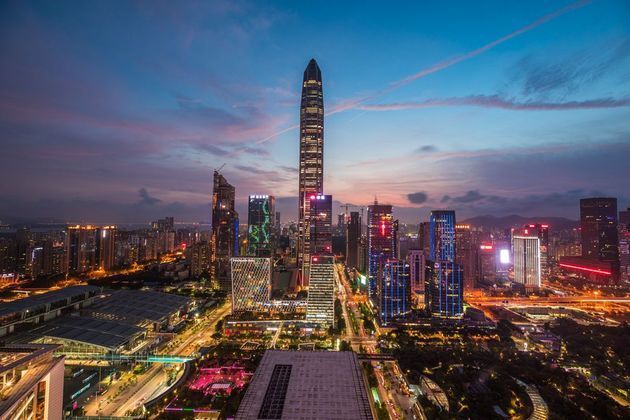
Shenzhen and Hong Kong, separated by a single river, share intertwined destinies. In 2025, Shenzhen’s GDP reached 3.87 trillion yuan, surpassing Hong Kong’s by approximately 800 billion yuan; its per capita living space was about 21.5 square meters, far exceeding Hong Kong’s 16 square meters. Shenzhen supports a population of 18.25 million on 1,997 square kilometers of land, while Hong Kong supports 7.5 million people on 1,114 square kilometers. Although Shenzhen’s population is 2.4 times that of Hong Kong, its per capita living space is actually greater. This contrast in itself raises a thought-provoking question: What has Shenzhen done right? And what lessons can Hong Kong learn from it?
I. The Land Dilemma: How Can the Challenges of Expropriation Under Common Law Be Resolved?
The core of Hong Kong’s housing problem lies not in a “lack of land,” but in the fact that “available land cannot be used.” Developed land in Hong Kong accounts for only 7% of its total area, with more than 40 percent of the land designated as country parks. At the same time, the Northern Metropolis faces a funding shortfall of at least 200 billion Hong Kong dollars. Chief Executive John Lee also acknowledged that the Northern Metropolis development faces “several bottlenecks,” including land development, funding, and talent. The cumbersome procedures involved in planning, public consultation, environmental impact assessments, and land acquisition—coupled with the risk of judicial review—have become a major obstacle to sustained development. If the Outline Zoning Plan applicable to a land acquisition project is subject to judicial review, development of other sites covered by that plan may also have to be suspended.
Shenzhen’s experience offers an alternative approach. The “Shenzhen Special Economic Zone Urban Renewal Ordinance,” enacted in 2021, lowered the threshold for individual expropriation from 1,001 TP3T to 951 TP3T and established a mechanism for resolving “holdout” cases through “individual expropriation plus administrative litigation.” The Luohe Luoling District renovation has become a benchmark case—as one of the nation’s first government-led pilot projects for urban village renovation, the Luoling project innovatively implemented a “government-led + state-owned enterprise implementation, clean-site transfer + market participation” model. The redevelopment project covers 12 hectares of land with a planned floor area of 377,000 square meters, and it was the first in the city to launch a large-scale pilot program for “housing voucher” resettlement, offering three options: property exchange, monetary compensation, and housing voucher resettlement.
The author believes that the success of the Shenzhen Model hinges on one key prerequisite: the Special Economic Zone’s legislative authority. The “Shenzhen Special Economic Zone Urban Renewal Ordinance” is the result of Shenzhen exercising its legislative authority as a Special Economic Zone, a power delegated by the National People’s Congress. As a common law jurisdiction, land expropriation in Hong Kong is governed by the Land Resumption Ordinance (Chapter 124), under which landowners may seek judicial review on grounds such as the illegality, unreasonableness, procedural impropriety, or breach of reasonable expectations of an administrative decision. Since the handover, although there have been only eight judicial review cases triggered by the government’s invocation of this ordinance to resume private land, the time required from the court’s granting of leave to the issuance of a judgment has ranged from a minimum of nine days to a maximum of no more than one year. In large-scale development projects, this is sufficient to cause significant time costs and financial pressure.
Hong Kong cannot simply replicate Shenzhen’s executive-led model; instead, it should explore “delegated” simplified procedures within the common law framework. Feasible approaches include: having the Legislative Council pass specific legislation granting special authority to implement simplified land acquisition procedures within designated areas of the Northern Metropolis; at the same time, establishing a fast-track arbitration mechanism to reduce the time required for judicial review—while safeguarding landowners’ rights to appeal—and prevent individual lawsuits from paralyzing the development progress of the entire region.
II. Quality of Life: Shenzhen’s “Quantity” vs. Hong Kong’s “Quality”
Behind Shenzhen’s per capita living space figure of 21.5 square meters lie structural issues regarding housing quality. According to sample data from the Seventh National Population Census, nearly 30% households in Shenzhen have a per capita housing floor area of less than 13 square meters. Renters account for approximately 70 percent of the city’s permanent resident population. The floor area and resident population of private homes in urban villages account for nearly half of the city’s total, effectively supporting “half the sky” of Shenzhen’s living space; however, the per capita living space in these urban villages is significantly lower than both the citywide average and the per capita average of major cities nationwide. There are 5.62 million units of “small-property-right housing” (including those in urban villages and housing built by work units), accounting for 52.% of the total. Of these, 80.% pose fire hazards, and 60.% lack formal property management.
This means that Shenzhen’s lead in terms of the “quantity” of per capita living space has not yet fully translated into an advantage in terms of “quality.” As Hong Kong draws on Shenzhen’s experience in land development, it should avoid repeating the mistake of “prioritizing quantity over quality.” The planning of the Northern Metropolis should not merely pursue an increase in the number of housing units; rather, it should establish clear standards for per-capita living space and indicators of residential quality—including natural lighting, ventilation, public spaces, and community amenities—to embed the development philosophy of “balancing quantity and quality” from the planning stage onward.
III. Industrial Transformation: The “Last Mile” from the Lab to the Factory
Hong Kong’s economy has long relied on four pillars—finance, trade, logistics, and tourism—and the problem of its one-dimensional structure has been laid bare amid global economic fluctuations. It took Shenzhen 20 years to transform from a “three-comes-one-processing” model to “China’s Silicon Valley.” Led by industry leaders such as Huawei, BYD, and DJI, the city has fostered industrial clusters and established an industrial system centered on high-tech manufacturing and equipment manufacturing.
Hong Kong is home to five universities ranked among the top 100 in the QS World University Rankings, and the InnoHK research platform brings together the world’s top scientific talent, producing a vast number of original research outcomes in fields such as new materials, artificial intelligence, semiconductors, and biopharmaceuticals. However, long-standing challenges persist, including a lack of industrial space, insufficient support for pilot-scale testing and validation, weak mass-production supply chains, and limited local application scenarios. Hong Kong’s intellectual property revenue accounts for only 0.11% of its total trade in goods and services, ranking 56th among 133 economies worldwide. The structural shortfall of “strong research but weak commercialization” urgently needs to be addressed.
The Hong Kong Campus of the Hetao Shenzhen-Hong Kong Science and Technology Innovation Cooperation Zone officially opened on December 22, 2025. Three buildings in Phase I of the park are now ready for use; approximately 80 percent of the floor space in the two wet lab buildings has been leased, while the remaining five buildings will be completed in stages starting in 2027. However, the completion of the entire Hong Kong Campus is expected to cost at least 200 billion Hong Kong dollars, a sum that the government alone cannot afford; it is therefore necessary to bring in market and social capital to jointly drive the project forward.
The BOT (Build-Operate-Transfer) model used for Shenzhen Metro Line 4 serves as an important reference. This project was the first urban rail line in China to be fully funded and constructed by foreign capital, breaking away from the traditional model of government-led investment that prevailed at the time. Under the BOT model, MTR Corporation is responsible for the engineering design, construction, operation, and maintenance of Line 4, with a 30-year concession period. Its uniqueness lies in the integration of land and property development with the BOT model, providing a successful example of private-sector participation in large-scale infrastructure projects.
Hong Kong could draw on the BOT model used for Shenzhen Metro Line 4 to explore innovative “Build-Operate-Transfer” financing approaches in the development of the Northern Metropolis and the Hetao Park. This would link future land gains and operating revenues from these areas to returns for private investors, thereby creating a virtuous cycle of “investment—return—reinvestment.”

IV. Funding Plan: From “Government-Led” to “Diversified Financing”
The estimated cost of the Northern Metropolis project exceeds HK$224 billion, while the revised budget deficit for Hong Kong’s non-operating accounts for the 2025/26 fiscal year is already close to HK$151.7 billion. It is unrealistic to rely solely on public funds to support the development of the Northern Metropolis.
In terms of financing innovation, the Hong Kong Foundation for Unity recommends that the government explore issuing “dedicated infrastructure bonds” targeting projects in the Northern District that are at a relatively advanced stage of development, strictly linking the loans to future land proceeds and operating revenues from specific areas, thereby implementing the principle of “dedicated bonds for dedicated purposes” and enabling the market to clearly see that funds are being allocated to projects with tangible economic benefits. The 2026 Budget proposed raising the combined borrowing ceiling for the two bond programs from 700 billion to 900 billion, with an average annual issuance of 160 billion to 220 billion over the next five years. The government also plans to inject 10 billion yuan each into the dedicated companies for the San Tin Science Park and the Hong Kong Park in the Hetao Area.
However, issuing bonds is only the starting point for financing. Shenzhen’s experience shows that successful infrastructure financing requires a dual-engine approach of “government guidance plus market-driven operations.” Hong Kong should build on this foundation and take further steps: explore cooperation with mainland policy banks to introduce cross-border infrastructure loans; establish a special account for land revenue in the Northern Metropolis to ensure that land appreciation gains are channeled exclusively back into regional development; and, drawing on Shenzhen’s experience with paired assistance, In 2025, Shenzhen allocated 3.915 billion yuan in provincial-level targeted assistance funds, dispatched 392 officials to serve on a permanent basis in the region, and established a cross-regional resource coordination mechanism.

Conclusion
Shenzhen’s success is no accident. It has dared to break new ground in land policy, remained steadfast in industrial transformation, and maintained clear objectives in the implementation of its planning. However, the Shenzhen model also has its shortcomings; the issue of living conditions in urban villages reminds us that a lead in “quantity” does not equate to an advantage in “quality.” Hong Kong and Shenzhen are not competitors, but rather “super partners” in the development of the Greater Bay Area.
Drawing on Shenzhen’s experience does not mean simply copying it; rather, it means absorbing its core insights in land development, industrial planning, and operational efficiency, while acknowledging the fundamental differences between common law and civil law in their institutional foundations. By combining Hong Kong’s strengths in the rule of law, its international perspective, and its open institutional framework, we can forge a path of high-quality development with Hong Kong’s distinctive characteristics.
Shenzhen, just across the river, has already pulled ahead. What Hong Kong needs is the courage to set aside its pride and learn with an open mind—and, even more importantly, the determination to turn that learning into action.
Author: Chen Chengyu
Consulting Expert at the Jianghai Grassroots Legislative Liaison Office of the Legislative Affairs Commission of the Standing Committee of the National People’s Congress; Founding President of the Greater Bay Area Youth Art and Technology Promotion Association; Member of the Tuen Mun Southwest District Committee; Executive Vice Chairman of the Guangdong-Hong Kong-Macao Greater Bay Area Innovation Think Tank; Vice President of the Hong Kong Social Development Association; Honorary President of the Health Industry Federation under the Guangdong Provincial Manufacturing Association; Researcher at the urban think tank “Just Speak Up”; Hong Kong Certified Financial Planner; Member of the Hong Kong Guangdong-Hong Kong-Macao Greater Bay Area Property and Facilities Management Federation; Member of the Hong Kong Institute of Housing Managers; Member of the Internet Professional Association; and holds a Ph.D. in Business Administration from the University of Valladolid, Spain.

